A Lesson Learned from Soggy Insulation
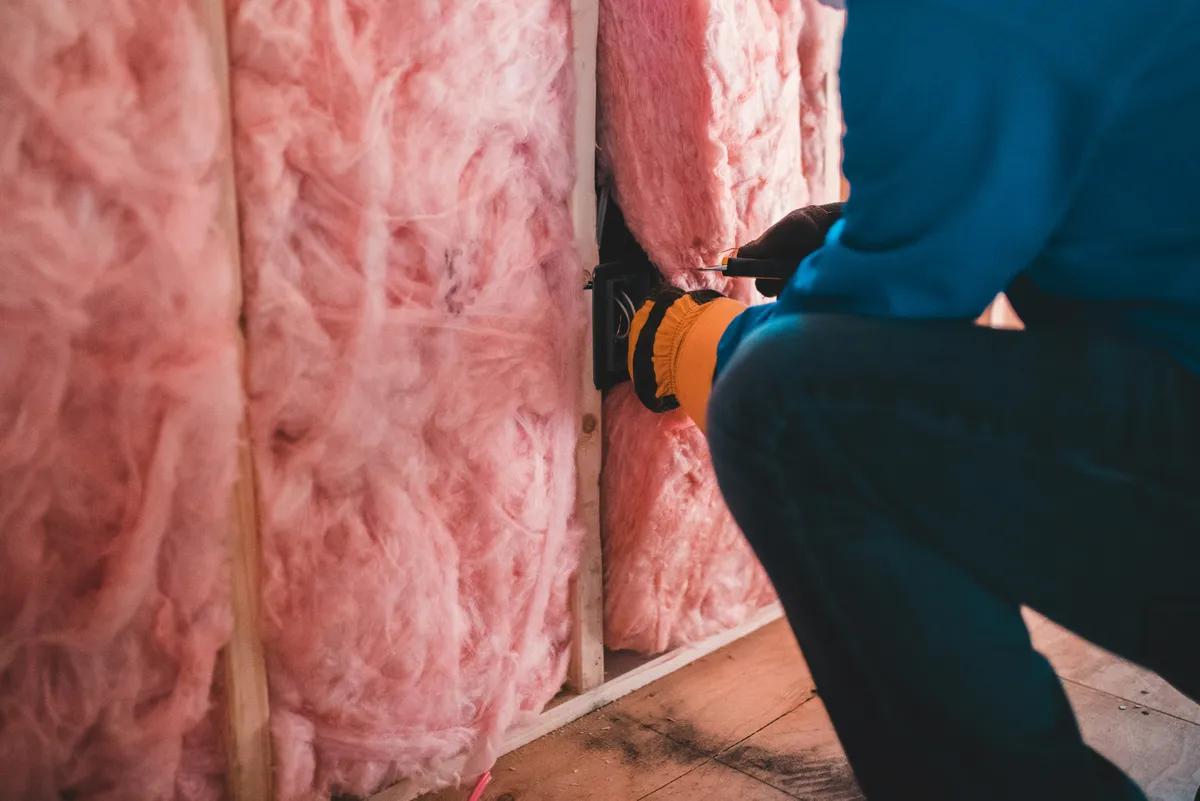
When Randall and I were building our house, we learned a lesson about money from a trailer full of soggy insulation.
We had found a great deal, drove to pick it up, loaded the trailer, and headed home feeling pretty good about ourselves.
Then the skies opened up.
We only had about fifteen minutes left to drive, but by the time we pulled into our driveway, the ends of nearly every insulation bundle were soaked.
And we couldn't afford to replace it. Those dollars already had a job.
If we spent the money again on insulation, it had to come from somewhere else. Maybe the flooring. Maybe the kitchen cabinets. Maybe we would have to delay finishing another room.
So we did what a lot of people building their own house would do. We hung insulation over every available rafter and floor joist and waited for it to dry.
It wasn't the plan. But every dollar mattered.
Every Dollar Already Had a Job
Let me back up a little.
When Randall and I decided to build our house, we knew from the beginning that we couldn't afford many surprises.
As an accountant, I naturally started with a budget. Not a rough estimate. A REAL budget.
We planned everything we could think of, right down to the nails, glue, insulation, and septic system. I think I made Randall crazy going over the lumber list multiple times and asking him to explain over and over how each section of the house would go together.
Believe it or not, planning was one of my favorite parts. It was fun to dream about the house we wanted and then work backwards to figure out how to build it with the money we actually had.
We knew how much cash was in the bank. We knew what we expected each part of the house to cost. Most importantly, we knew what each of those dollars needed to accomplish.
The planning seemed to last forever. We redrew plans, waited on permits, checked boxes, and waited what felt like an eternity for septic approval.
Then one day, the paperwork was done and the first shovel went into the ground.
Within weeks, we went from dirt to a roughed-in house. Even better, we were on budget, maybe even a little under.
Then came the insulation. That rainstorm didn't change how much money we had. It changed what our money needed to do.
And that's the part I have never forgotten. Every dollar has a job. When one dollar doesn't do its job, another dollar has to.
Growing Trades Companies Have the Same Problem
If you own a growing construction, HVAC, plumbing, electrical, roofing, or other trades company, I have a feeling you've lived some version of our soggy insulation story.
Maybe materials cost more than you estimated.
Maybe a job took two extra days.
Maybe you had to send a crew back to fix something.
Maybe a truck broke down at exactly the wrong time.
Whatever happened, the bill still had to be paid. And that money had to come from somewhere.
That's why cash flow can become so confusing as a trades company grows.
Revenue is growing.
The schedule is full.
Your team is working hard.
You're completing more jobs than ever.
But somehow the cash in the bank isn't growing with the business.
Sound familiar?
In trades, margins can be tight, so every revenue dollar matters. I like to think of those revenue dollars as workers in your company. Every one of them needs to show up ready to work.
Some pay for materials.
Some pay your hardworking team.
Some put gas in the trucks.
Some pay for your building, insurance, software, equipment, and electricity.
Some need to pay taxes or debt.
And hopefully, some make it all the way to the bank to help build the cushion you need for future growth.
The problem comes when those revenue workers don't end up doing the jobs you expected them to do.
If materials run over budget, those dollars still have to come from somewhere.
If labor takes longer than expected, those dollars still have to come from somewhere.
If overhead quietly grows as the company grows, those dollars still have to come from somewhere.
When one dollar doesn't do its job, another dollar has to.
More Software Doesn't Always Create More Clarity
This is where I see growing trades companies get frustrated. You are busy doing the work that actually serves your customers. You're keeping roofs over families' heads, lights on, water running, and homes cool on hot summer days.
After a long day doing that, the last thing you want to do is sit at a computer trying to figure out where your revenue dollars got lost or stuck.
So you buy software that promises to help. Now your accounting is in one system. Your jobs may be managed in another. Payroll is somewhere else. Customer information may live in a CRM. And, of course, your actual cash is sitting in the bank.
Every system has information. But none of them seem to tell quite the same story.
Here's something I've learned after almost 30 years working in finance: The accounting software usually isn't broken. The systems around it are.
Your accounting system may correctly tell you what was recorded.
Your job management system may correctly tell you what happened on the job.
Your payroll system may correctly tell you what you paid your team.
Your bank account definitely knows how much cash is left.
But can you easily connect those pieces and see what every revenue dollar actually did?
That's the question. Because the goal isn't another report.
The goal is knowing where your money went so you can decide where it should go next.
The Bottom Line
THE DHF IDEA
Every revenue dollar has a job. When one dollar doesn't do its job, another dollar has to.
WHAT YOU NEED TO WATCH FOR
Materials. Labor. Overhead. Debt. Taxes. And, most importantly, what's actually making it to the bank.
THE HIDDEN OPPORTUNITY (BURIED TREASURE)
Map where your revenue dollars are actually going. Your Financial BLUEPRINT will show you where to focus first.
THE QUESTION YOU MUST ASK YOURSELF RIGHT NOW
"If every dollar in my trades business has a job, do I know what every dollar did this month?"
The Hound's Take
If your revenue is growing but your cash isn't, don't automatically assume your business is broken.
Your dollars may simply be doing jobs you can't clearly see yet.
Follow them.
Meet the Lead Hound
Howdy Y'all!
I'm Kathy (aka Shepherd), founder of Data Hounds Finance.
I am a CPA by trade, an engineer at heart, and happiest with dirt under my fingernails.
I'm a wife to an amazing husband (also a trades business owner), a Jesus follower, and the proud caretaker of an ever-growing collection of cats, dogs, chickens, turkeys...and whatever else decides to wander onto our little farm.
For almost 30 years I've helped businesses untangle financial messes by doing one simple thing: fixing the system instead of fixing the same problem over and over.
Life's too short to spend it manually updating spreadsheets or redoing work a computer can finish in five seconds. I'd rather put technology to work so people can spend their time thinking, creating, serving customers, and building better businesses.
Whether I'm pulling weeds in the garden or weeds out of an accounting system, I'm usually asking the same question:
"How can we fix this once, and fix it right?"
Thanks for spending a few minutes with me.
Until next time...keep pulling weeds at the root and don't forget to enjoy the harvest.
Kathy